Working principle
In vibration cleaning, parts or part carriers are set into controlled mechanical vibration. The motion energy introduced detaches loosely adhering particulate contamination: such as chips, dust or abrasion residues, from the surface. The detached particles are then removed, typically by extraction. The principle: vibration plus controlled flow across the part geometry. Works dry as well as wet. In the dry variant, detached particles are removed by extraction. Today, TeSe frequently combines dry and wet cleaning in the same process, for example when filmic residues also need to be removed or rinsing media take over contamination removal.
Vibration cleaning is well suited to direct integration into production lines, for example as an inline station between machining and assembly, or upstream of inspection steps. TeSe AG’s technology partner for vibration cleaning is Ossberger.
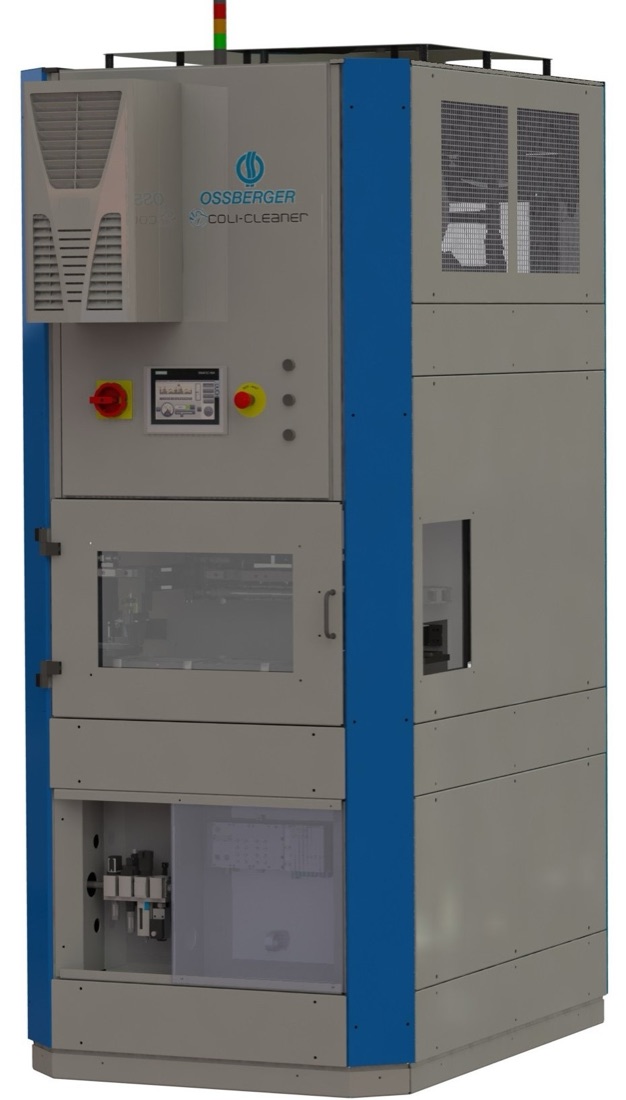
Advantages
- Flexible: dry, wet or as a dry-wet combination using the same vibration principle
- Inline-capable: direct integration into the production line is possible
- Suitable for loosely adhering particles such as chips, dust and abrasion residues
- Dry variant without a fluid circuit: no bath maintenance, no disposal of cleaning liquids
- Automatable, reproducible process step in series production
Typical applications
Vibration cleaning is suitable wherever particulate contamination needs to be removed in series production, for example after machining or stamping operations, and before assembly and inspection steps. A real-world application from TeSe AG’s practice is the inline cleaning at Dormakaba, which is documented on video.
Test the process at TeSe
We establish in trials whether your parts and contamination are suited to vibration cleaning: 1–2 hours of testing free of charge. In-depth feasibility studies: CHF 1’200 per day, 50% credited against a machine purchase.
Documents & videos for this process
Videos
Technology Partner · Ossberger