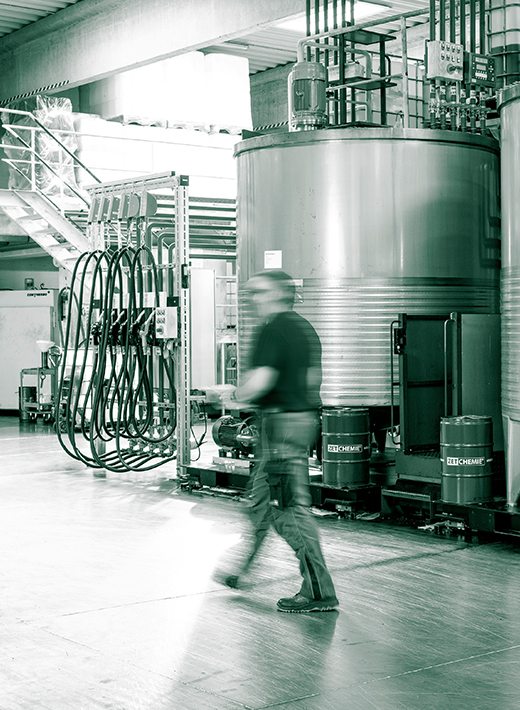
Product categories
In industrial parts cleaning, machine and chemistry form one system: a stable, reproducible result is only achieved when the cleaning medium is matched to the contamination, the material and the process. TeSe therefore supplies process chemistry to match the machine technology, from a single source. This applies to new systems as well as to existing processes, for example when a cleaner needs to be replaced or a bath re-adjusted.
- Solvents, for removing oils, greases and other non-polar contamination remaining on parts after machining or forming.
- Aqueous cleaners, for filmic and particulate contamination; the selection depends on the material, the type of contamination and the subsequent production step.
- Recycling concepts: treatment and recirculation of cleaning media to extend bath life and to reduce consumption and disposal volumes.
Typical tasks in process chemistry
Common questions where the right chemistry makes the difference:
- Stains after degreasing on parts from the solvent system: whether chlorinated or non-chlorinated hydrocarbons or modified alcohols.
- Reliable separation of solvent and the contamination removed.
- Odour emissions in production from hydrocarbon or alcohol systems.
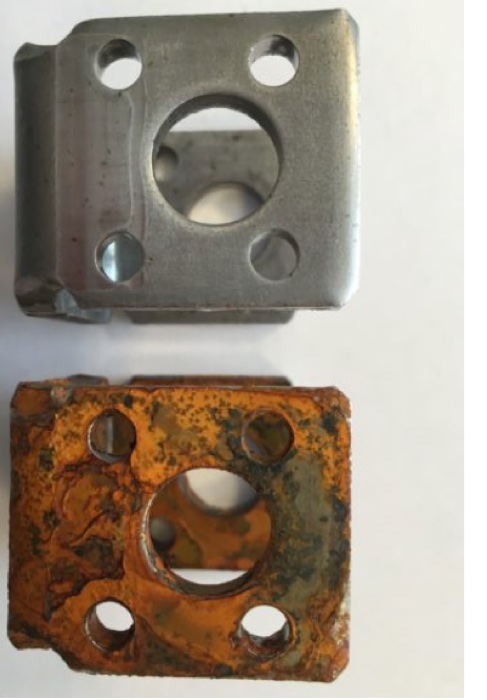
- Monitoring corrosion protection, in the baths of the degreasing or preservation system.
Advice by area of use
Which chemistry fits depends on the machine and the task. We advise in three areas:
- For degreasing machines: isoparaffinic hydrocarbons, de-aromatised white spirits, test and special-grade spirits, alcohols.
- For aqueous cleaning systems: immersion, ultrasonic and spray degreasers, emulsifiers and demulsifiers, defoamers.
- For protecting your parts: corrosion-protection oils, aqueous corrosion-protection media, dewatering fluids, corrosion-protection additives for CHC/HC degreasing systems, binders and stabilisers.
From practice: the distillation cut
Sometimes less is more. The distillation cut is a quality indicator of your solvent: the lower the distillation tolerance, that is, the narrower the boiling range (e.g. 175–188 °C for multi-component mixtures such as hydrocarbons), the more easily the degreasing system separates removed contamination such as oils and chemical cutting-oil additives by distillation. A tip for your next order: check the boiling range in the safety data sheet. Good hydrocarbons should not exceed a boiling tolerance of 15 °C.
Switching without the hassle
When switching to one of our solvents, we support you free of charge: draining, cleaning and refilling your system, including, on request, a complete system inspection.
Partner ZET-Chemie
For process chemistry, TeSe works with ZET-Chemie. Its ZET-clean product line complements the machine technology supplied by TeSe; the product is selected to suit the cleaning task, not the other way round.
Testing chemistry at TeSe
A trial on your original parts shows whether a cleaning medium suits your task: 1–2 hours of tests free of charge. In-depth feasibility studies: CHF 1’200 per day, 50% creditable against a machine purchase.