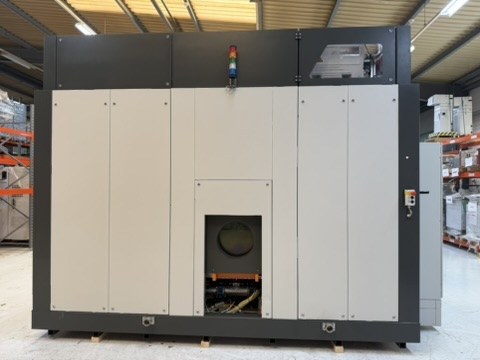
Cleaning system
Key data
- Manufacturer
- Karl Roll GmbH & Co. KG
- Type / model
- RCTS 067-048-030-03
- Year of manufacture
- 2014
- Condition
- Perfect condition, serviced annually by us
- Price
- on request
What this system is
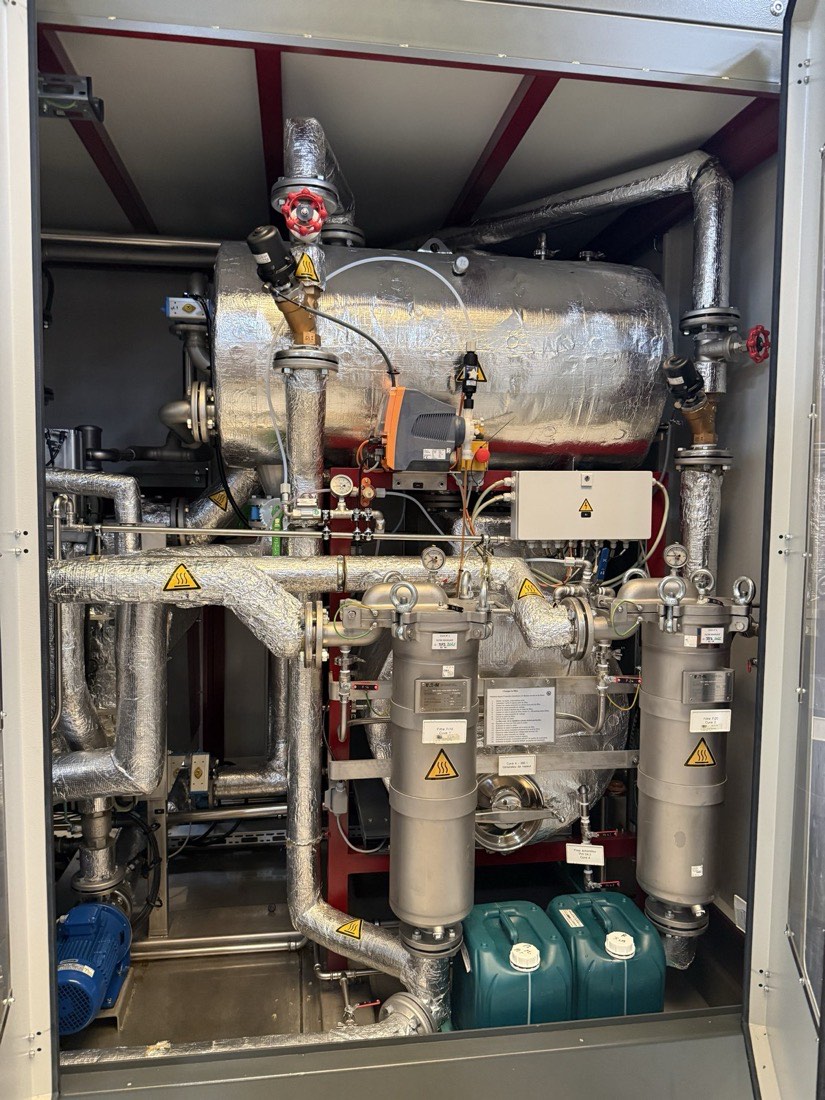
A used cleaning system from Karl Roll. The type plate identifies it as RCTS 067-048-030-03, the system reference is KO5185, and the year of manufacture is 05/2014.
Cleaning is done with solvent – either modified alcohol or hydrocarbon – supported by ultrasonics and pressure flooding. Both are adjustable: the pressure in bar, the ultrasonic power in intensity. The ultrasonics work at two frequencies, 27 and 80 kHz. The basket rotation can be adjusted as well – in angle and in speed. The process can therefore be matched to the part instead of running on a fixed setting.
This is followed by vacuum drying; the solvent is treated by integrated distillation with water separation. The operator interface is bilingual, German and French.
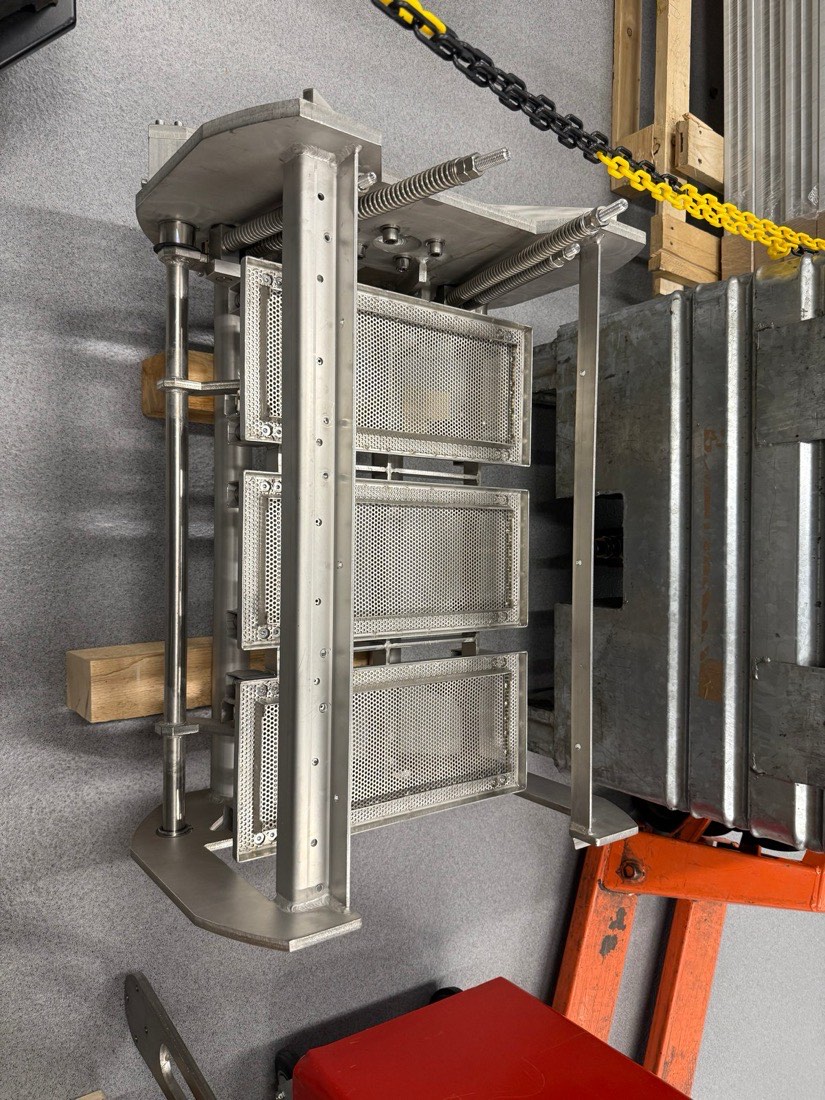
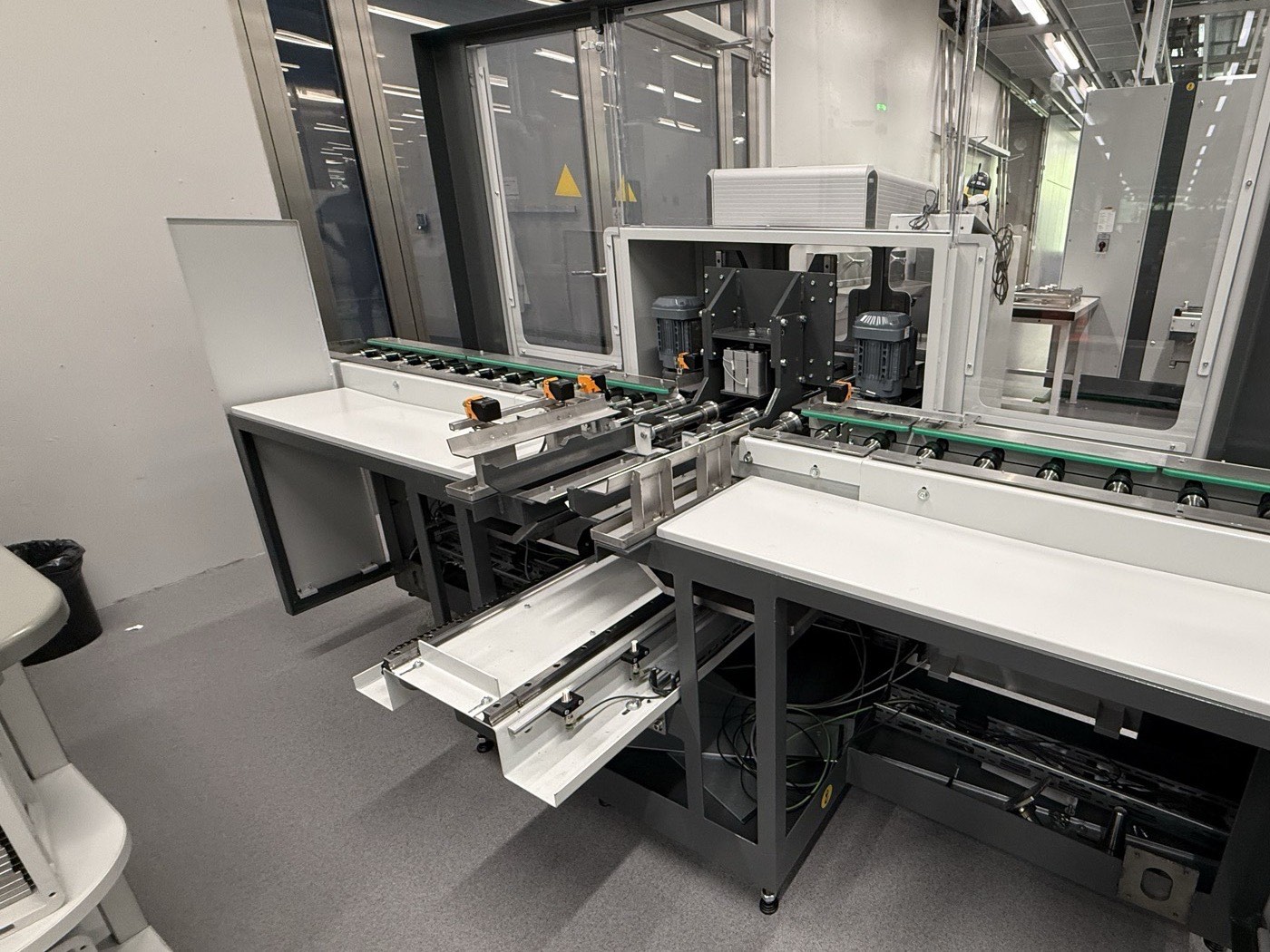
The system comes with automatic loading for smaller baskets, taking three baskets per batch. The large basket size is 640 × 480 × 300 mm.
What the system was used for
The system has cleaned high-quality watch parts spot-free – and it did so with a high oil load and a small proportion of sulphur. That is exactly where the adjustable parameters prove their worth: where no spot is tolerated, the fine tuning of ultrasonics, pressure and rotation decides the result.
Technical data
| Feature | Value |
|---|---|
| Manufacturer | Karl Roll |
| Model per type plate | RCTS 067-048-030-03 |
| System reference | KO5185 |
| Year of manufacture | 05/2014 |
| Cleaning | solvent, with ultrasonics and pressure flooding |
| Cleaning medium | modified alcohol or hydrocarbon |
| Ultrasonics | two frequencies, 27 and 80 kHz, power adjustable |
| Pressure flooding | pressure adjustable in bar |
| Load movement | basket rotation, angle and speed adjustable |
| Drying | vacuum drying with vacuum pump |
| Cycle time | process-dependent, around 8 to 15 minutes |
| Total batch weight, maximum | 120 kg including basket and parts, with load evenly distributed about the axis of rotation |
| Capacity according to the manual | max. 5 batches/h at 60 kg including basket, depending on cleaning programme |
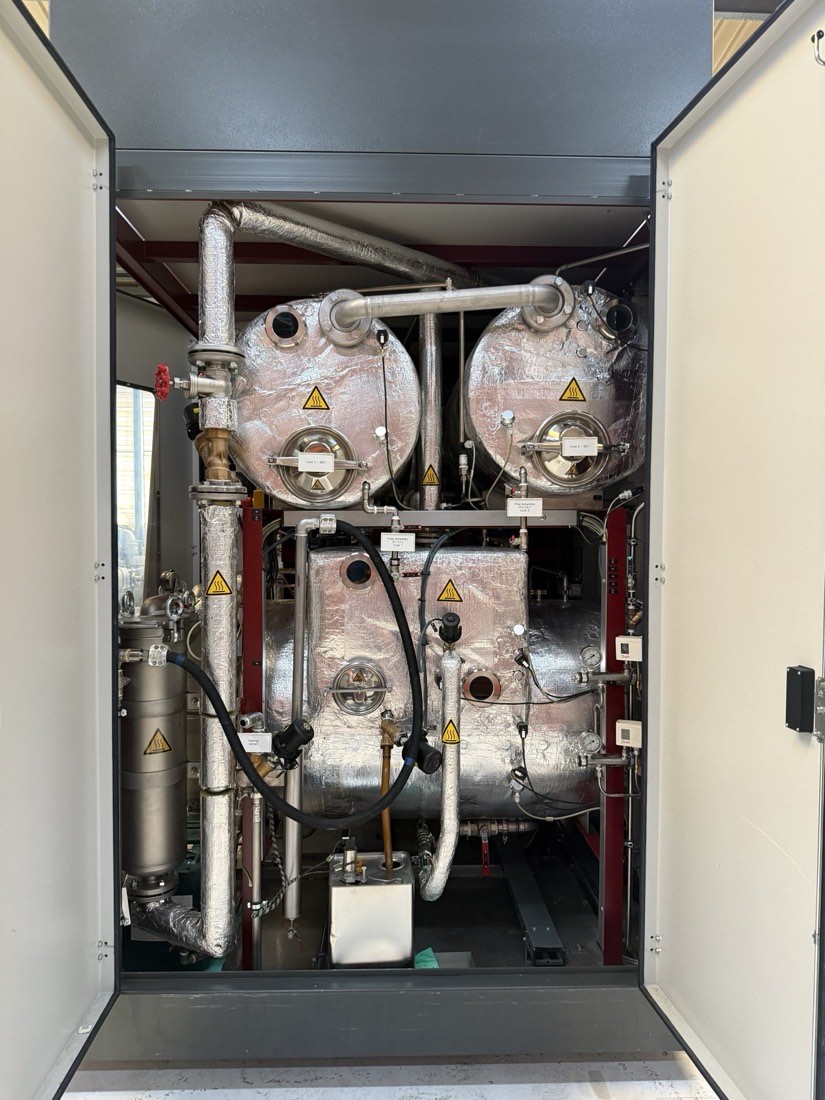
| Tanks | three: coarse cleaning, rinsing, steam generator |
| Solvent treatment | cascade, continuous, with water separator |
| Oil discharge | second, separately built distillation, continuous |
| Operator interface | German and French |
| Handling | roller conveyor, loading/unloading, pneumatics |
| Basket size, large | 640 × 480 × 300 mm |
| Loading | automatic, three small baskets per batch |
| Retrofit | dosing pump for additive, February 2023 |
| Electrical connection per equipment documentation | 400 V, 50 Hz, TN-S supply system |
| Connected load per equipment documentation | 54 kW, 96 A |
| Upstream fuse per equipment documentation | max. 125 A |
| Steam generator heating output per equipment documentation | 36 kW, heater operates intermittently |
| Cleaning tank heating | both indirectly via the steam generator |
The 120 kg includes basket and parts. With eccentric loading or parts that can move, the permissible load can be significantly lower. The capacity stated in the manual applies to 60 kg including basket, depends on the cleaning programme and is not to be understood as a throughput commitment for 120 kg.
The 36 kW heating output of the steam generator is to be distinguished from the 54 kW total connected load. The heater operates intermittently; the full heating output is not drawn continuously. The actual power input depends on the operating state and the cleaning programme. Connected load and heating output do not indicate actual energy consumption.
The connection values are taken from the equipment documentation. We check the current connection requirements and the installation dimensions for the proposed site. We work out the achievable cycle time and permissible load for your parts based on the cleaning programme and the basket configuration.
How long a cycle takes
The cycle time follows from the washing process, and you compose that at the operator interface as you need it. Two reference points from practice:
- Around 8 minutes where parts are only de-oiled and not finally cleaned – drying included.
- Around 15 minutes for very thorough cleaning with many parts in the basket.
Everything in between is adjustable. What your parts require is shown by the trial in our laboratory – more reliable than any figure on a used-equipment page.
The solvent circuit
This is where spot-free cleaning is decided. The system has three tanks:
- Feed tank for coarse cleaning
- Tank for the rinsing process
- Steam generator
The solvent treated in the steam generator goes back into the rinsing tank. That tank therefore stays permanently very clean – and that is exactly what matters when no spot may remain. From there the solvent cascades into the pre-cleaning tank, and from that one into the steam generator. Treatment is thus continuous, not batch-wise.
The oils collect in the steam generator. They are discharged by a second, separately built distillation – continuously as well.
Dosing against sulphur residues
A dosing pump was retrofitted in February 2023. It comes into play where cutting oils carry sulphur into the bath: an additive binds the sulphur residues in the still automatically, and they are discharged via the residue distillation. If your cutting oils contain sulphur, that answer is already built in.
Service history and condition
We looked after this system ourselves. It was serviced annually, and we know it and its condition first-hand. Each annual service included:
- Servicing of the vacuum pump
- Solvent change
- Leak test
- Complete replacement of sealing rings and wear parts
The system is in perfect condition.
Loading: three routes
The existing loading is designed for smaller baskets and has to be adapted in any case. The hardware being included does not mean the conversion work is included. For the large basket size there are three routes – they are mutually exclusive, so it is a decision:
- Adapt the existing automatic loading. The hardware is part of the basic scope; the adaptation is separate work.
- New automatic loading for the large basket size.
- Manual loading table for the large basket size.
Which route makes sense depends on your cycle and your basket size. We look at that together before you commit.
What is included – and what is not
Included in the basic scope
- The system
- The existing automatic loading for smaller baskets
Not included
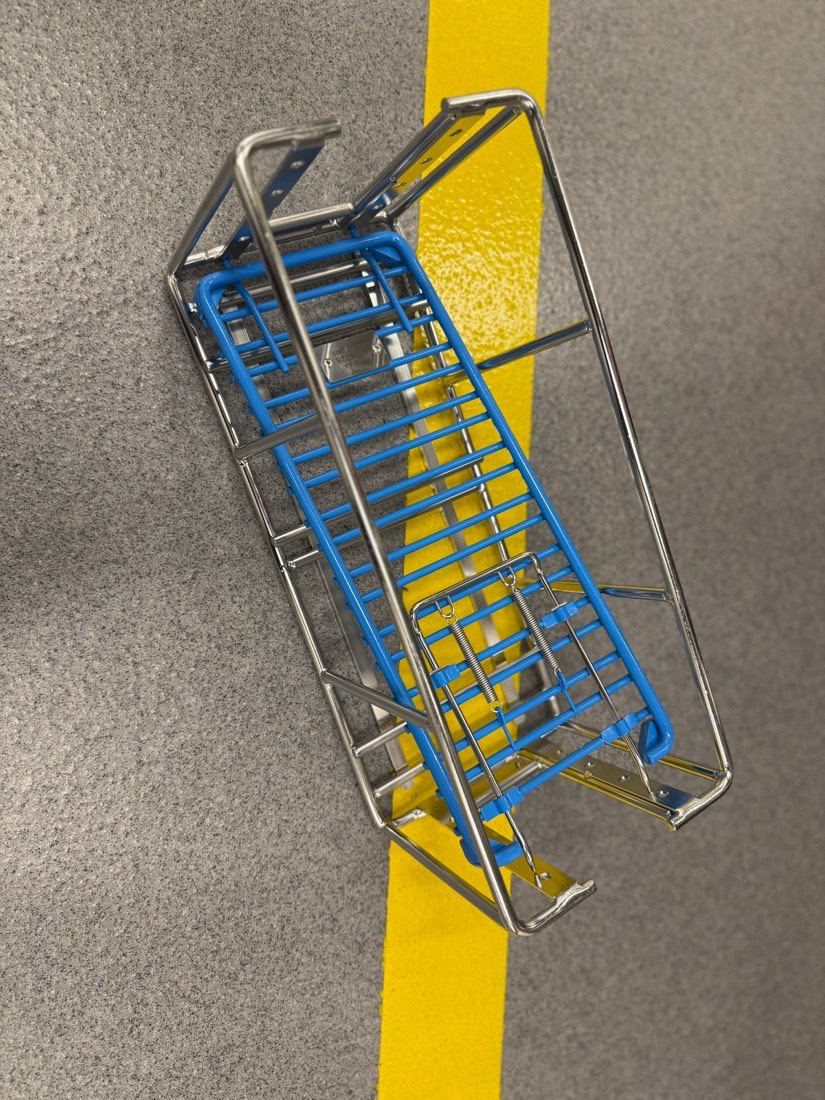
- The baskets shown in the photographs. They serve for illustration only.
- Adapting the loading to a different basket size
- New automatic loading or a manual loading table
The offer is ex site. Whether and to what extent we handle transport, installation and commissioning is clarified project by project.
Next step
We check beforehand on your original part, in our application laboratory, whether the process suits your components. 1–2 hours of testing are free.
We answer questions about the system, the technical data or the loading directly: Request a quotation – please quote “RCTS 067-048-030-03”.
More photos