Requirements in medical technology
In medical technology, cleaning is a documented, reproducible process step within a regulated manufacturing environment. Particulate and filmic residues have to be removed reliably and gently: traceably and without affecting the function or surface of the part.
The range extends from individual pieces and small batches to large-scale production, always with batch traceability. Machine parameters assessed as critical are continuously recorded throughout.
Typical parts and contamination
From this industry, we clean above all:
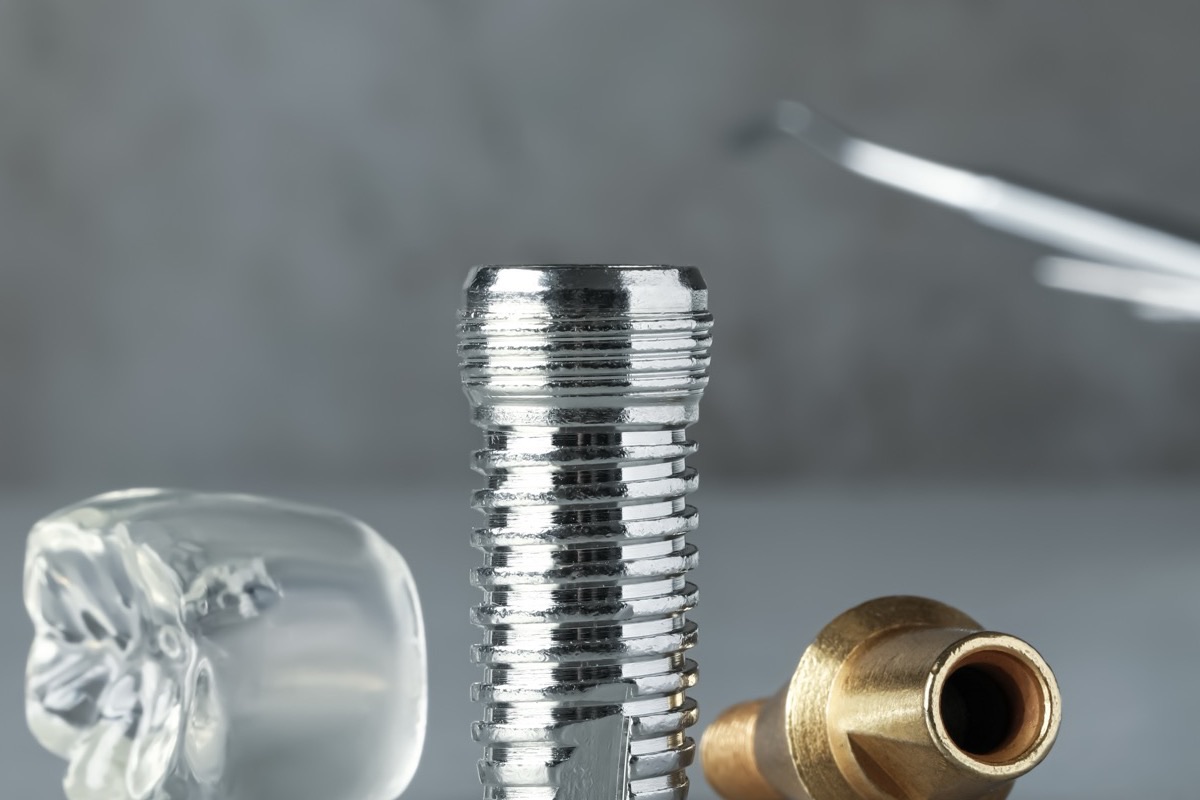
- Parts: implants, surgical instruments, dental parts, electronics as well as batteries for implants and components for analytics (e.g. chromatography), including the parts built into them
- Materials: titanium, ceramics, PEEK and implant steels
- Contamination: machining oils and emulsions, chips and burrs, passivation chemicals as well as handling residues
The combination of a regulated environment, sensitive materials and function-critical surfaces makes cleaning demanding: it has to be reliable, gentle and fully documented.
Suitable processes
Which process fits best depends on the part, the contamination and the batch size: we advise on a technology-neutral basis. Especially for deburring, for example on titanium parts: ACP’s CO₂ snow and PowerSnow blasting is well suited. Dry, residue-free and material-friendly. For this industry, the following are particularly relevant:
- Plasma & corona pre-treatment: fine cleaning and surface activation without chemicals
- CO₂ snow blasting: CO₂ snow and PowerSnow blasting (ACP), also for deburring titanium parts
- Ultrasonic cleaning: thorough cleaning of fine geometries and cavities in an immersion bath
- Laser cleaning: selective, contactless removal of defined contamination
- Wet-chemical cleaning: aqueous or solvent-based cleaning, also for oils and greases
Downstream processes
In medical technology, virtually every conceivable process step follows cleaning, from passivation through coatings of all kinds and laser processing to sterilisation, packaging and assembly. Because each of these steps places its own demands on filmic and particulate cleanliness, we always define the cleanliness target from the next process step, not the other way around.
Measurement and quality assurance
In medical technology, cleanliness is a documented inspection step. TeSe carries out part of the inspections in-house: checks under a high-resolution microscope with various light sources as well as contact angle measurement to determine the surface tension. More advanced inspections such as scanning electron microscopy (SEM), residual contamination analyses or chemical and chromatographic analyses are predominantly customer-defined processes that TeSe partly accompanies.
For traceability, batches are documented and machine parameters assessed as critical are continuously recorded, so the result remains traceable across the entire series.
Biocompatible media and equipment technology
For biocompatible requirements, two media routes come into consideration depending on the application: modified alcohols (such as ZET clean 82 and 82i), which unfold their biocompatibility in vacuum systems of the RCTS type, as well as aqueous media, including passivation agents. Both can be used in in-line immersion systems or in combined single-chamber systems, designed as RUT and RCTS (TwinTec systems from Karl Roll GmbH). Together with ZET-Chemie, we match medium, system and process so that cleaning and further processing fit together.
Practical examples
A few examples show how broadly medical-technology cleaning is covered at TeSe:
- Gloor AG in Burgdorf cleans medical gas fittings for hospitals in Roll degreasing systems.
- Dental instruments are cleaned in large quantities in Roll degreasing systems.
- Optical electronics for endoscopes are cleaned in a system overhauled by TeSe.
- Ceramic capillaries for medicine are cleaned with CO₂ snow.
- Implants and tools are deburred on titanium parts with CO₂ PowerSnow.
Frequently asked questions
Which medical-technology parts does TeSe clean? Implants, surgical instruments, dental parts, electronics and batteries for implants as well as analytics components (e.g. for chromatography) and the parts built into them.
Is the cleaning documented and traceable? Yes. Batches are documented, and machine parameters assessed as critical are continuously recorded.
Who carries out the cleanliness inspections? TeSe inspects in-house with a high-resolution microscope (various light sources) and contact angle measurement. More advanced analyses (SEM, residual contamination, chemical/chromatographic) are predominantly customer-side processes that TeSe partly accompanies.
Are there biocompatible cleaning media? Yes. Depending on the application, modified alcohols (e.g. ZET clean 82 / 82i) in vacuum systems of the RCTS type or aqueous media such as passivation agents: operated in in-line immersion or single-chamber systems (RUT and RCTS, TwinTec systems from Karl Roll GmbH).
Test the process at TeSe
Whether a process meets your industry’s requirements on your actual part is shown by a trial: 1–2 hours of testing free of charge. In-depth feasibility studies: CHF 1’200 per day, 50% creditable against a machine purchase.
Documents & videos
Datasheets & brochures
Wet-chemical cleaning (aqueous) – Karl Roll
Solvent cleaning – Karl Roll
Plasma & corona pre-treatment – Ferben
- Ferrarini & Benelli · BrochureEN
CO₂ snow & PowerSnow – ACP
- PowerSnow · BrochureEN
- JetWorker · DatasheetDEEN
- JetWorker High Purity · DatasheetEN
- JetStation · DatasheetDEEN
- JetStation High Purity · DatasheetEN
- JetModule · DatasheetDEEN
- JetModule High Purity · DatasheetEN
- JetCell · DatasheetDEEN
- JetCell High Purity · DatasheetEN
- High Purity Cleaning · BrochureEN
- ACP Systems AG · CertificateDE
- quattroClean CO₂ (Linde) · CertificateEN
Cleaning baskets
Videos
Plasma & corona pre-treatment
CO₂ snow blasting
Wet cleaning
Process chemistry